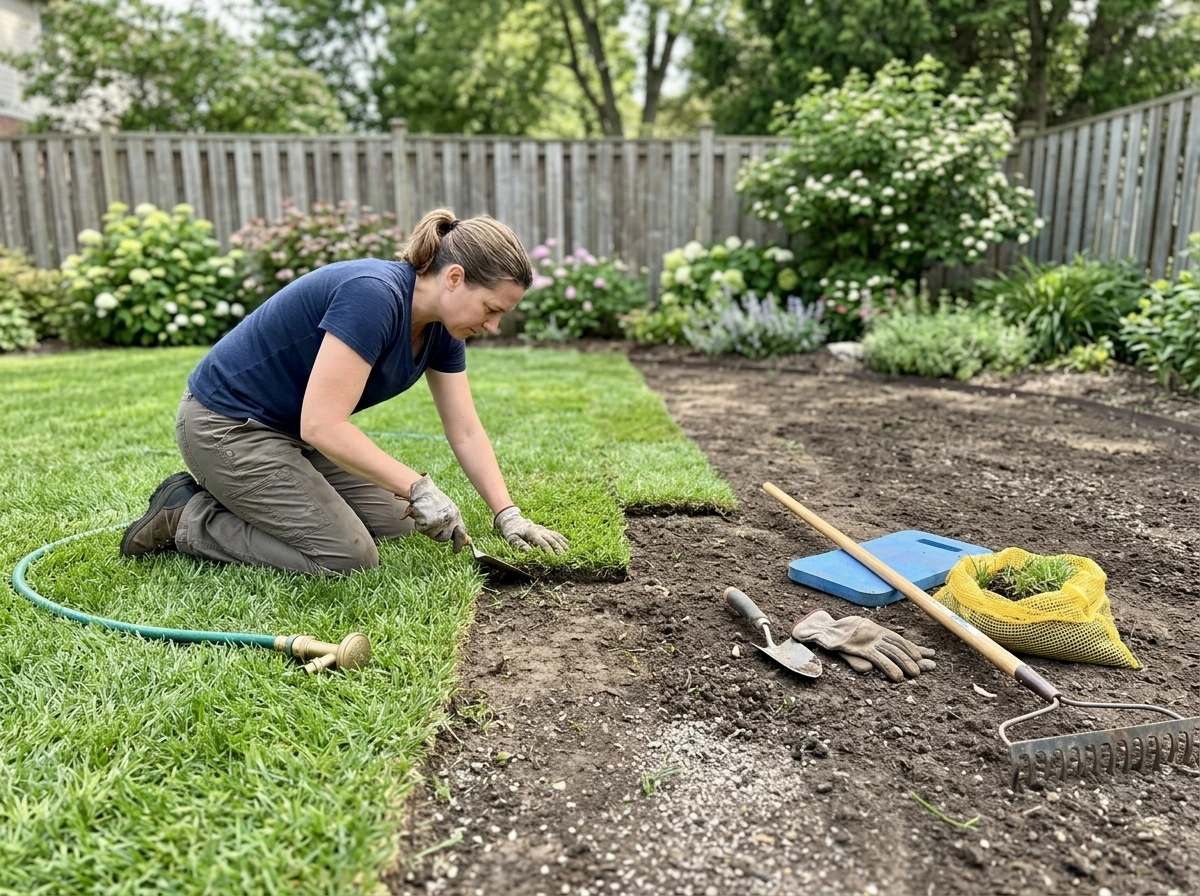
Growing grass successfully comes down to three things: picking the right seed for your yard, planting at the right time, and keeping the soil moist long enough for seeds to germinate. Get those three right and you will have grass. Miss any one of them and you will be reseeding in a few weeks wondering what went wrong. This guide walks you through every step, from choosing a grass variety through troubleshooting a lawn that just will not fill in, so you know what to use to grow grass.
How to Grow Grass Step by Step From Seed for Any Yard
Marcus Tillwell
24 Mar 2026
Choosing the right grass type for your yard
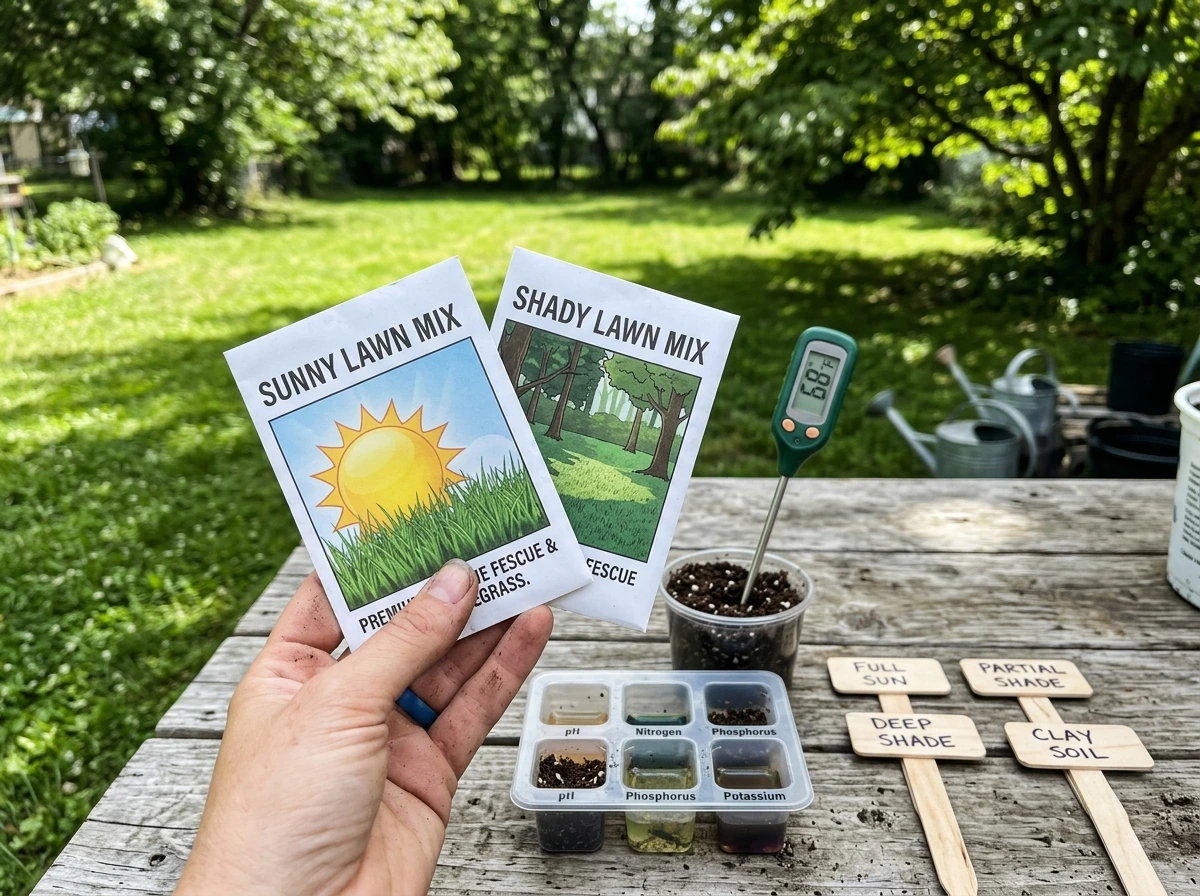
The biggest mistake homeowners make is buying whatever seed is cheapest at the hardware store without checking whether it actually suits their climate, soil, and sun exposure. Grass falls into two broad camps: cool-season grasses (which thrive in the northern half of the country and the transition zone) and warm-season grasses (which dominate the South and Southwest). Picking the wrong camp means fighting the grass every single year.
Cool-season grasses grow most aggressively in spring and fall when soil temperatures sit between roughly 50 and 65 degrees Fahrenheit. Tall fescue is the workhorse of this group. It tolerates heat better than most cool-season options, handles partial shade, and works in a wide range of soils. Perennial ryegrass germinates faster than almost anything else (as quickly as 4 to 6 days under good conditions), which makes it great for quick repairs and overseeding. Kentucky bluegrass looks the best of the bunch, deep green and dense, but it is slow to establish (14 to 30 days to germinate), needs more sun, and performs best in the northern Midwest and Northeast. If you are in the transition zone, tall fescue is usually the safest bet.
Warm-season grasses go dormant and turn brown in winter, but they handle summer heat and drought far better than cool-season types. Bermudagrass is aggressive, traffic-tolerant, and loves full sun. It spreads by stolons and rhizomes, which means it will fill in bare spots on its own once established. Zoysiagrass is slower but denser, more shade-tolerant than bermuda, and handles foot traffic well. Both need soil temperatures consistently above 65 to 70 degrees Fahrenheit before seeding. If you are in the South, Southeast, or Texas, one of these is almost certainly your answer.
| Grass Type | Climate | Sun Needs | Germination Time | Best For |
|---|---|---|---|---|
| Tall Fescue | Cool/Transition | Full sun to partial shade | 5–12 days | Most cool-season yards, clay soil tolerance |
| Perennial Ryegrass | Cool/Transition | Full sun to light shade | 4–10 days | Fast repairs, overseeding, quick cover |
| Kentucky Bluegrass | Cool (North) | Full sun | 14–30 days | Dense, lush northern lawns |
| Bermudagrass | Warm (South) | Full sun | 10–30 days | High-traffic, drought-prone yards |
| Zoysiagrass | Warm/Transition | Full sun to light shade | 14–21 days | Dense, low-maintenance southern lawns |
If you are not sure which grass type is native to your region, look at what your neighbors with healthy lawns are growing. That is the most reliable field test available. You can also check USDA hardiness zone resources or your local cooperative extension office, which will give you region-specific variety recommendations for free.
Best timing and conditions for starting grass
Timing is the single variable that causes more failed seedings than anything else. You can have perfect soil and great seed, but if you plant at the wrong time of year, the seed either cooks, freezes, or gets outcompeted by weeds before it has a chance.
For cool-season grasses, late summer to early fall is almost always the best window. University of Minnesota Extension puts the ideal range at mid-August to mid-September for northern states. Cornell research confirms that Kentucky bluegrass and tall fescue do best when seeded in August, while perennial ryegrass can push into September. The logic is simple: soil is still warm enough to drive germination, air temperatures are cooling down so the seedlings do not cook, and fall rains reduce your watering burden. A spring seeding is possible but harder. You are racing against summer heat, weed pressure, and drought stress all at once.
For warm-season grasses like bermuda and zoysia, reverse that calendar. You want to seed in late spring to early summer, once soil temperatures are consistently above 65 to 70 degrees Fahrenheit. Planting too early, when the soil is still cold, means the seed sits dormant and rots or gets eaten by birds. In most of the South this means late April through June is your window.
One underused option worth knowing about: dormant seeding. This means putting cool-season seed down in late fall, after the soil is too cold to germinate, so it sits over winter and sprouts in early spring as conditions improve. University of Minnesota Extension describes this as a way to reduce water needs and spread out the labor of establishment. It is not for everyone, and you will lose some seed to winter conditions, but in northern climates it can work well if your fall planting window was missed.
Soil prep and lawn leveling for seed success
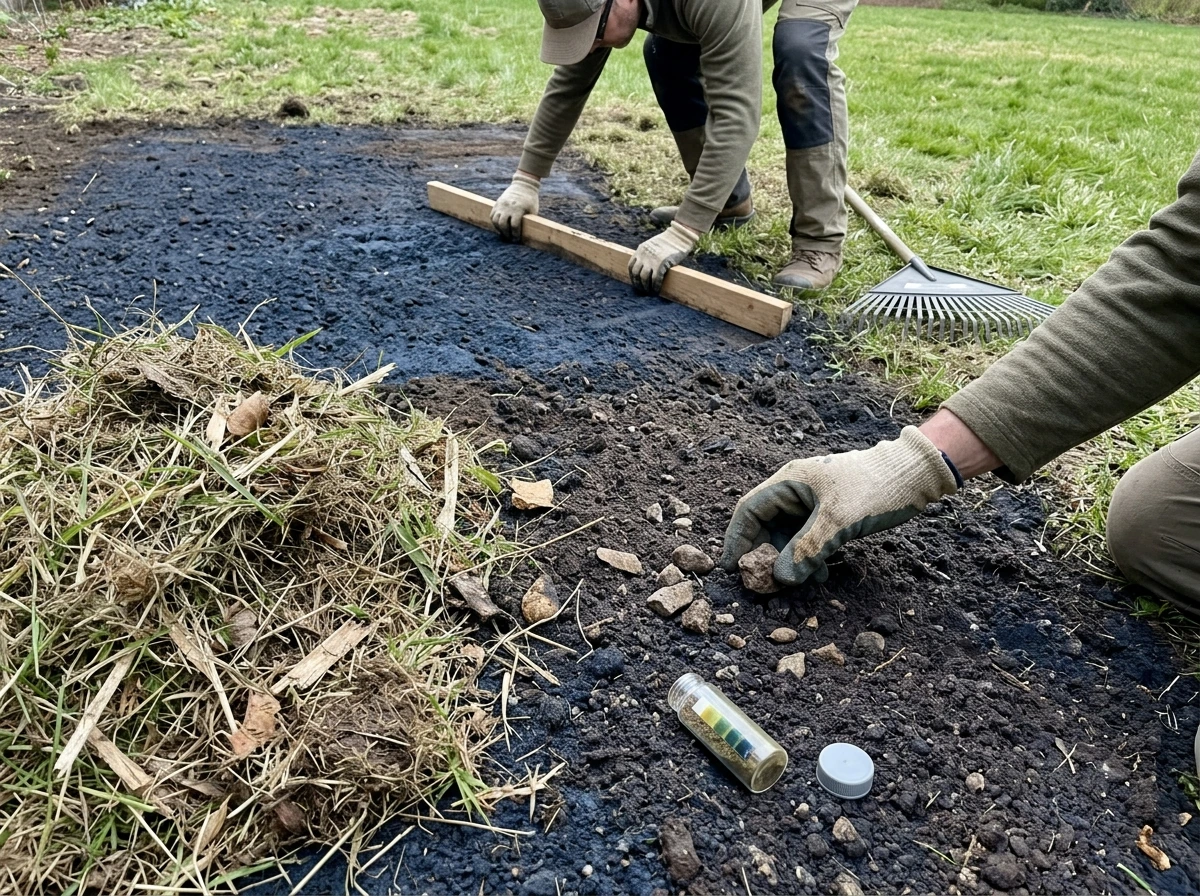
Seed needs direct contact with soil to germinate. Thatch, compaction, rocks, and debris all break that contact and kill germination rates. Good soil prep is not glamorous but it is the foundation of everything that follows.
Start by testing your soil pH. Cool-season grasses want a pH between roughly 6.0 and 7.0. If your soil is acidic (common in the East and Midwest), lime brings the pH up. University of Kentucky Extension specifically recommends applying lime during seedbed preparation for new seedings rather than waiting until after. A basic soil test from your county extension office costs a few dollars and will tell you exactly what your soil needs.
Next, loosen the top 2 to 4 inches of soil with a garden rake, tiller, or even a hard-tined rake on small areas. This is especially important in compacted clay soils. If you are starting a new lawn from scratch, you want the surface rough, not smooth, because rough soil holds seed better and prevents runoff. Remove any rocks larger than a golf ball and rake out any obvious debris.
Apply a starter fertilizer before seeding and work it into that top 2 to 4 inch zone. UC ANR guidance recommends limiting nitrogen to no more than 1 pound of N per 1,000 square feet at planting time, with at least 1 pound of phosphorus per 1,000 square feet included to support root development. Most starter fertilizers sold at garden centers are formulated close to these ratios, so look for one with a higher middle number (phosphorus) on the bag.
Level the surface as best you can before seeding. Low spots collect water and can drown seedlings. High spots dry out fast. You do not need laser-perfect grades, but obvious dips and humps should be corrected by moving soil around. A long board dragged across the surface works surprisingly well for this on small areas.
Step-by-step: how to plant grass seed
Once your soil is prepped, the actual seeding process is straightforward. Here is the full workflow:
- Check the seeding rate on your seed bag and stick to it. Overseeding does not mean more grass. It creates competition, weak seedlings, and poor establishment. For perennial ryegrass used for overseeding, rates around 8 to 10 pounds per 1,000 square feet are common.
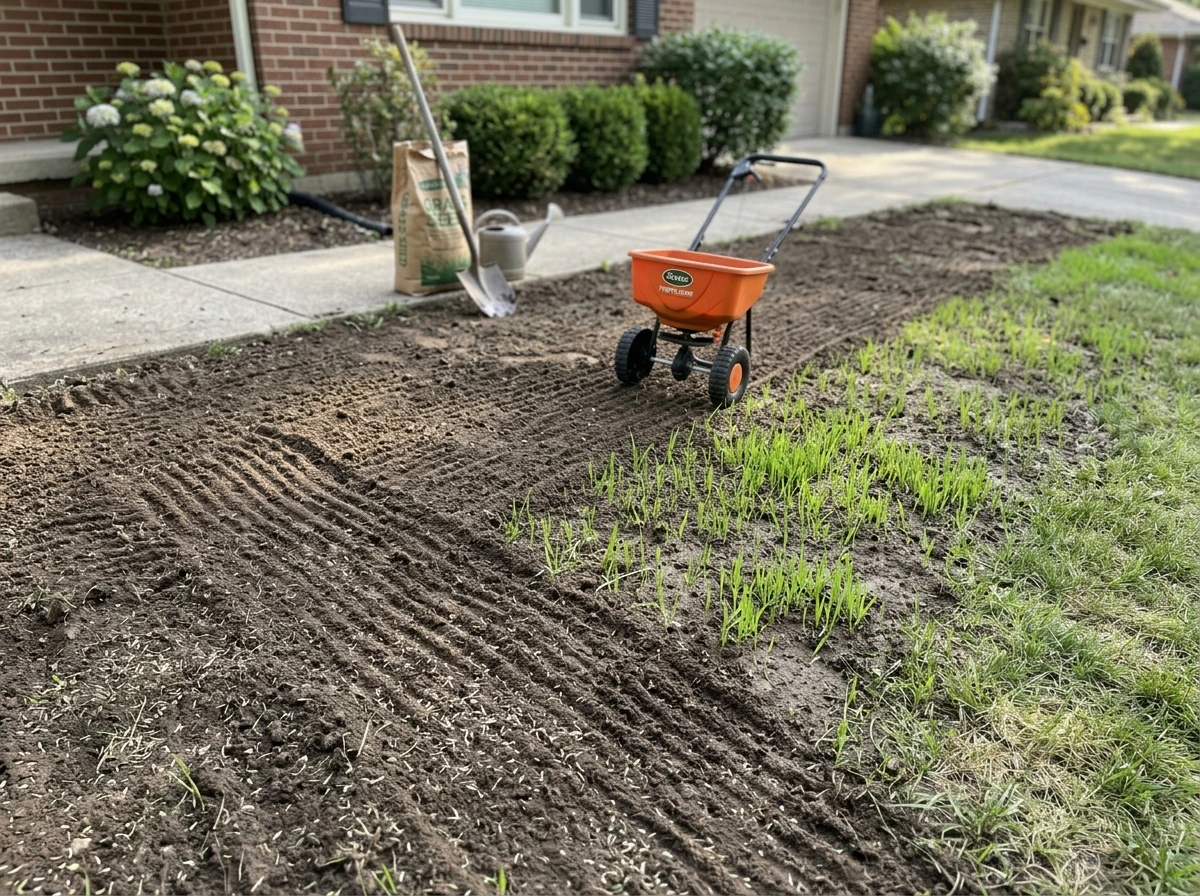
- Use a broadcast spreader for large areas and hand-broadcast or a small drop spreader for tight spots. Split your seed in half and apply in two passes at right angles to each other (north-south, then east-west). This prevents gaps and gives more even coverage.
- After spreading seed, drag a leaf rake lightly over the surface. Penn State Extension specifically recommends this for small-scale areas to improve seed-to-soil contact. You want seed covered to about 1/8 to 1/4 inch deep. Penn State also notes that some seeds should still be visible at the surface — if all seed is buried you have gone too deep.
- Apply a light layer of straw mulch over the seeded area. One bale per 1,000 square feet is the standard rate from Iowa State Extension. The straw holds moisture, protects seed from birds, and reduces surface crusting. Use clean, weed-free straw, not hay.
- Water immediately after seeding, gently and thoroughly. You want the top inch or two of soil moist, not flooded.
- Mark the area with flags or string if foot traffic is a risk. New seedlings are killed instantly by being walked on before they root.
Hydroseeding: when it makes sense
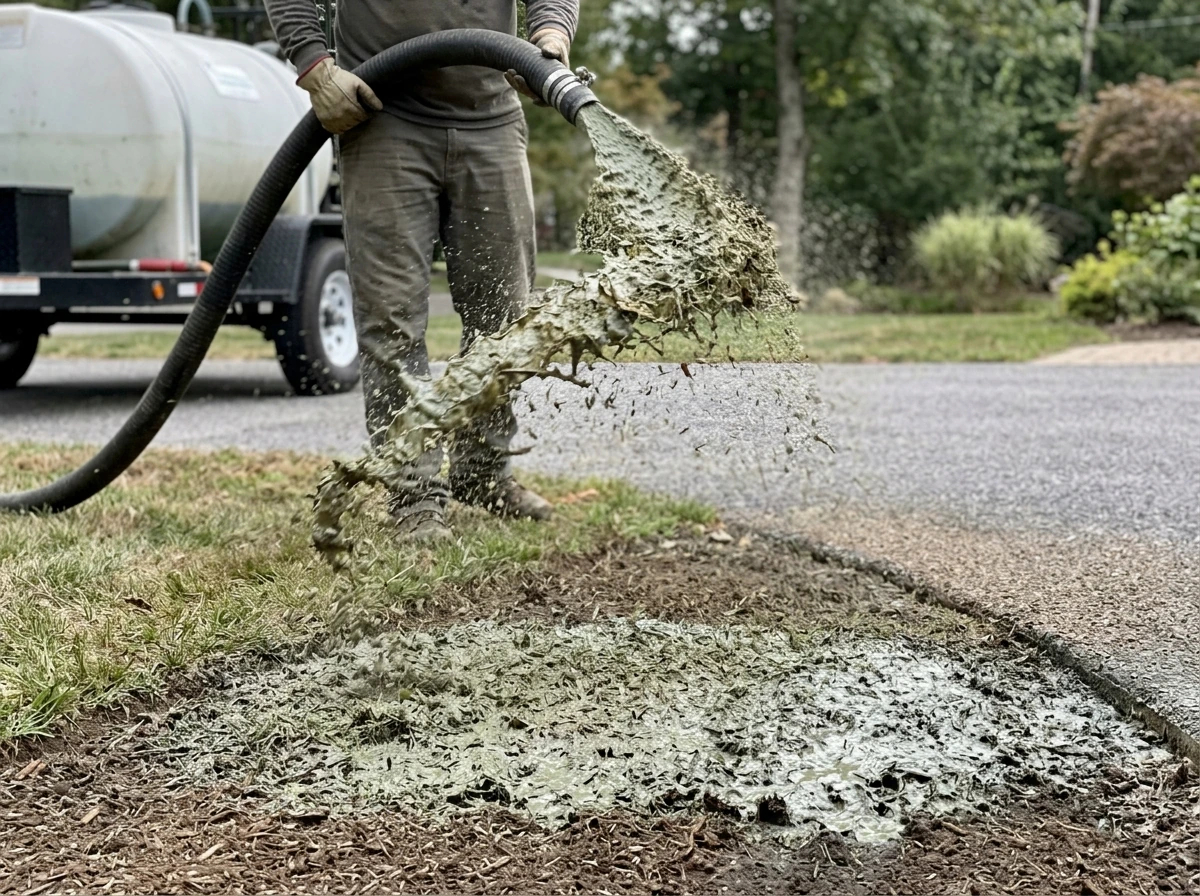
Hydroseeding uses a tank (typically 500 to 1,500 gallons) to spray a slurry of seed, fertilizer, water, and mulch across a large area in one pass. Penn State Extension and the Tallgrass Prairie Center both note that hydroseeding equipment often includes a tackifier, which is a binding agent that helps hold seed and mulch to the soil surface and prevents washout on slopes. If you are seeding a large slope or a new construction site with exposed soil, renting a hydroseeder or hiring it out is worth considering. For a typical suburban backyard, a spreader and a rake is all you need.
How germination and early growth work
Understanding what is happening underground during those first two weeks will save you a lot of anxiety. After you seed, nothing visible happens for days. The seed is absorbing water, the seed coat is softening, and the embryo is waking up. Then a root (radicle) pushes down before any shoot appears above ground. This is why the surface can look dead when germination is actually well underway.
Germination timelines vary significantly by species. Under ideal conditions, perennial ryegrass can show green in as few as 4 to 6 days. Tall fescue typically takes 5 to 12 days. Kentucky bluegrass is the slowest of the common cool-season types, usually 14 to 30 days. If you seeded a mix, you will see the ryegrass pop first, then fescue, and bluegrass last. This is normal, not a sign that your bluegrass failed.
Once seedlings appear, they are fragile. They have a tiny root system and almost no reserves. This is when consistent moisture matters most. Do not let the surface dry out. But also do not drown them. You are aiming for consistently moist, not wet.
At around 2 inches of height, the seedlings are ready for their first mow and for you to start transitioning your watering approach. Iowa State Extension identifies this 2-inch mark as the pivot point: mow for the first time and begin watering less frequently but more deeply to encourage roots to go down. Michigan State Extension adds that you should keep foot traffic off the lawn until you cannot see any bare soil between plants, which is the real signal that establishment is complete.
Watering, mowing, and fertilizing to help it fill in
Watering: the most critical variable
During germination, you need to keep the top inch of soil consistently moist. In hot or windy weather, this can mean watering two to three times a day with short, light cycles. University of Minnesota Extension recommends watering to a depth of 4 to 6 inches as your baseline, then using light and frequent irrigation (up to 3 to 4 times per day) during the seedling establishment phase. A light misting pattern is better than a hard stream that washes seed around.
Once seedlings are 2 inches tall, shift to deeper, less frequent watering. The goal is to push roots down by making water available deeper in the soil. Shallow, frequent watering creates shallow roots that will struggle in summer heat or drought. After the lawn is fully established (usually 6 to 8 weeks from seeding), water deeply once or twice a week rather than a little every day.
Mowing: do it earlier than you think
Mow as soon as the grass reaches about 3 inches tall, according to Michigan State University Extension. A lot of homeowners wait too long, thinking they are letting the grass build strength. What actually happens is that long, floppy seedlings shade each other out, fall over, and mat. Mowing at 3 inches with a sharp blade actually stimulates tillering and lateral growth, which is how your lawn fills in. For dormant-seeded lawns, University of Minnesota Extension recommends waiting until seedlings are at least 3 inches and mowing above the normal height to reduce stress.
Fertilizing after establishment
You applied starter fertilizer before seeding. That is step one. Once the lawn is mowed for the first time and actively growing, a follow-up fertilizer application with nitrogen helps the grass thicken and fill in. For cool-season grasses, the best time for this second feeding is fall. For warm-season grasses, it is mid-summer when they are actively growing. Do not push nitrogen on a new lawn too early or too aggressively. It can burn seedlings and encourage weed growth at the expense of your grass.
Troubleshooting by problem area
Bare spots that won't fill in
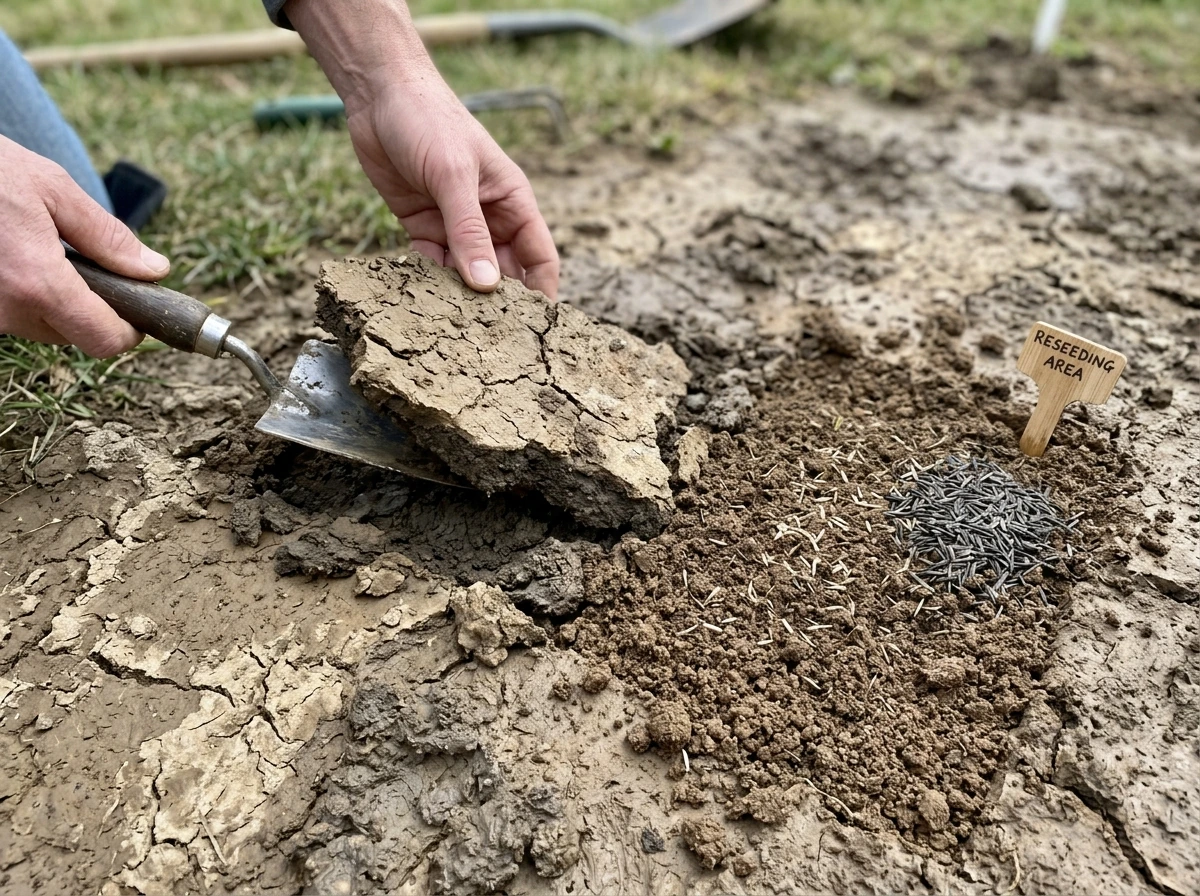
Persistent bare spots usually have a cause, and reseeding without finding it is wasted effort. Common culprits are compacted soil (water and seed both bead off it), low pH that kills seedlings, heavy shade, drainage problems that drown roots, or a subsurface issue like gravel or debris left from construction. Before reseeding a bare spot, scratch the soil surface with a hand rake to see what you are working with. If the soil is rock-hard, aerate or loosen it first. Then reseed with a species matched to the conditions in that specific spot, such as a shade-tolerant fescue if that area gets limited sun.
Clay soil
Clay soil holds water but compacts easily and can become crusted after rain, which physically blocks seedling emergence. The fix is to loosen the top 2 to 4 inches before seeding, incorporate compost if possible, and avoid seeding right before heavy rain. Tall fescue handles clay better than most grass types. After establishment, annual aeration goes a long way toward keeping clay lawns healthy. For pH, clay soils in the East and Midwest often run acidic, so lime is frequently needed. Get a soil test and apply accordingly.
Sandy soil
Sandy soil drains so fast that the surface dries out within hours of watering, especially in summer. Seed germination fails because the seedbed cannot stay moist long enough. To counter this, water more frequently during establishment (sometimes four or more short cycles a day in hot weather), use straw mulch to slow evaporation, and consider incorporating compost to improve water retention. Bermudagrass actually handles sandy, well-drained soils quite well once established, because its deep roots find moisture that sandy surfaces cannot hold.
Shaded areas
No grass truly thrives in deep shade, but some handle it far better than others. Tall fescue is your best cool-season option for partial shade. Zoysiagrass is the most shade-tolerant of the common warm-season types. If a spot gets fewer than 4 hours of direct sun daily, even shade-tolerant grass will struggle to fill in. In those areas, consider overseeding more aggressively each fall to compensate for annual thinning, or redirect your energy toward shade-tolerant ground covers instead. Trying to force a full, dense lawn under heavy tree canopy is a battle you will lose every time.
Pets
Dog urine burns grass because of concentrated nitrogen salts, and heavy traffic from dogs creates compaction and physical damage. For new seedings, keep dogs off the lawn entirely until establishment is complete and you cannot see soil between plants. For ongoing urine spots, tall fescue and perennial ryegrass tend to be more wear-tolerant than Kentucky bluegrass. Spot-repair urine spots by raking out the dead grass, loosening the soil, and reseeding. Diluting spots immediately after your dog goes (a quick splash of water on the spot) dramatically reduces burn damage.
Regional climate differences
Your region dictates almost everything about grass selection and timing. In the North (Minnesota, Iowa, the Great Lakes), late-summer seeding of cool-season grasses is standard, and dormant seeding is a viable option for missed fall windows. In the transition zone (the Carolinas, Tennessee, Virginia, parts of Texas), you can grow both cool and warm-season grasses but neither is perfect year-round. Tall fescue is the most popular solution here. North Carolina State TurfFiles emphasizes that establishment success in the transition zone depends heavily on matching your seeding date to favorable soil temperatures for your chosen species. In the deep South and Texas, bermudagrass and zoysiagrass dominate, and Texas A&M AgriLife Extension recommends letting soil temperatures (not calendar dates) drive your planting decision. Perennial ryegrass is used in the South specifically for winter overseeding of dormant warm-season lawns to keep things green in cooler months.
Whatever your region, the path to a great lawn runs through the same fundamentals: Whatever your region, the path to a great lawn runs through the same fundamentals: match your grass type to your climate and sun exposure, plant at the [right time of year](/home-lawn-solutions/what-do-i-need-to-grow-grass), prep your soil before anything goes in the ground, keep the seedbed consistently moist through germination, and mow early to encourage density, then follow this guide on how to grow great grass for the full walkthrough. Most lawn failures are not bad luck. They are one of those steps skipped or done out of order. Get them right and the grass will grow.
FAQ
Can I grow a lawn from grass seed year-round if I water a lot?
In most climates, no. Even with extra watering, seed will fail if soil temperatures are outside the species range (cool-season often needs roughly 50 to 65°F, warm-season needs consistently above about 65 to 70°F). Calendar timing matters because it controls heat stress, weed competition, and whether the seed actually germinates instead of rotting.
How long should I keep watering daily after seeding?
Plan on keeping the top inch consistently moist until seedlings are up and established, then transition gradually. A practical approach is to water lightly and frequently during germination (sometimes multiple short cycles on hot, windy days), then when seedlings reach about 2 inches, switch to deeper but less frequent irrigation to drive roots down.
Do I need to cover grass seed with soil or mulch after sowing?
Seed needs direct contact with soil. A thin mulch layer can help hold moisture, but do not bury seed deeply. If you use straw, use a light, breathable layer and keep it loose enough that seedlings can reach the surface.
What seed rate should I use, and what if I sow too much seed?
Use the rate on your seed bag for your mix and target density. Over-seeding can increase disease and competition early, while under-seeding leaves bare areas that are harder to fix later. If you are patching, it helps to calculate based on the square footage of the bare area, then match the mix to sun and soil conditions there.
Should I use starter fertilizer right before or after seeding?
Use starter fertilizer before or during seeding so it ends up in the top working zone with the seedbed preparation. If you fertilize heavily after germination begins, you can stress seedlings or encourage weeds, especially if nitrogen is too high or applied too early.
Is it better to hydroseed or use a spreader for a typical backyard?
For small to medium yards, a handheld or broadcast spreader plus a rake is usually more controllable and less expensive. Hydroseeding becomes more worthwhile for large areas, steep slopes, or exposed construction soil because equipment can apply mulch and bonding agents to reduce washout, but it is still not “automatic success” if timing and soil prep are wrong.
My seed looks like it germinated, but it stops. What are common causes?
Most stop-and-fade failures come from seedbed drying out after initial sprouting, watering cycles that are too shallow (creating shallow roots), or crusting after rain that blocks emergence. Re-check soil moisture by feel, then loosen the top surface if it crusted, and consider overseeding the thin spots only after you confirm the original cause is fixed.
When should I mow, and how low can I cut new grass?
Mow when seedlings reach about 3 inches tall, not later. Cutting too low early can scalp fragile plants and slow establishment. Use a sharp blade, and avoid mowing when the ground is muddy or when seedlings are still struggling to fill in.
How do I tell the difference between slow germination and failed seed?
Species differ. Kentucky bluegrass can take roughly 14 to 30 days, so a “not yet” look can be normal. If you seeded a mix, you may see faster types come in first. A better test is to gently scratch a small section of the seedbed after a reasonable time window and look for swelling seeds or small roots.
What’s the fastest way to repair bare spots in an existing lawn?
First diagnose the spot (shade, compaction, drainage, pH, or buried debris). Then scarify or lightly rake to restore seed-to-soil contact, loosen the top couple inches if the area is compacted, reseed with a species matched to that exact light level, and keep the surface consistently moist until new plants reach about 2 inches tall.
Will lime fix poor germination if my soil is acidic?
Often it helps, but only if you lime based on a soil test and incorporate it during seedbed preparation. Applying lime without knowing your pH can overshoot or waste money. Also, lime does not rescue a spot that has compaction, heavy shade, or poor drainage, so confirm the real limiting factor first.
How do I prevent erosion after seeding on a slope?
Limit washout by improving seedbed roughness, avoiding seeding immediately before heavy rain, and using erosion-control approaches such as straw mulch (lightly applied) or a tackifier-based hydroseeding slurry on larger slopes. The goal is to keep seed and mulch from moving while still allowing seedlings to emerge.
Can I seed over pet urine spots or is it permanent damage?
It is usually repairable. For new seedings, keep pets off the area until plants are established and you cannot see bare soil between plants. For existing urine burns, rake out dead grass, loosen the soil, reseed, and water lightly immediately after urine to dilute salts and reduce future burn.
Do I need aeration before seeding, or can I just overseed?
Aeration helps when the issue is compaction or poor seed-to-soil contact. If you can visibly see crusting or the soil is hard, loosening (or spot aeration) before overseeding improves germination. If the problem is mainly shade or drainage, aeration alone will not solve it, and switching species or addressing drainage is the real fix.
Next Article
How to Grow Zoysia Grass: Step-by-Step Guide for Success
Step-by-step how to grow zoysia: choose the right type, prep soil, plant plugs or sod, then water, mow, fertilize, fix b