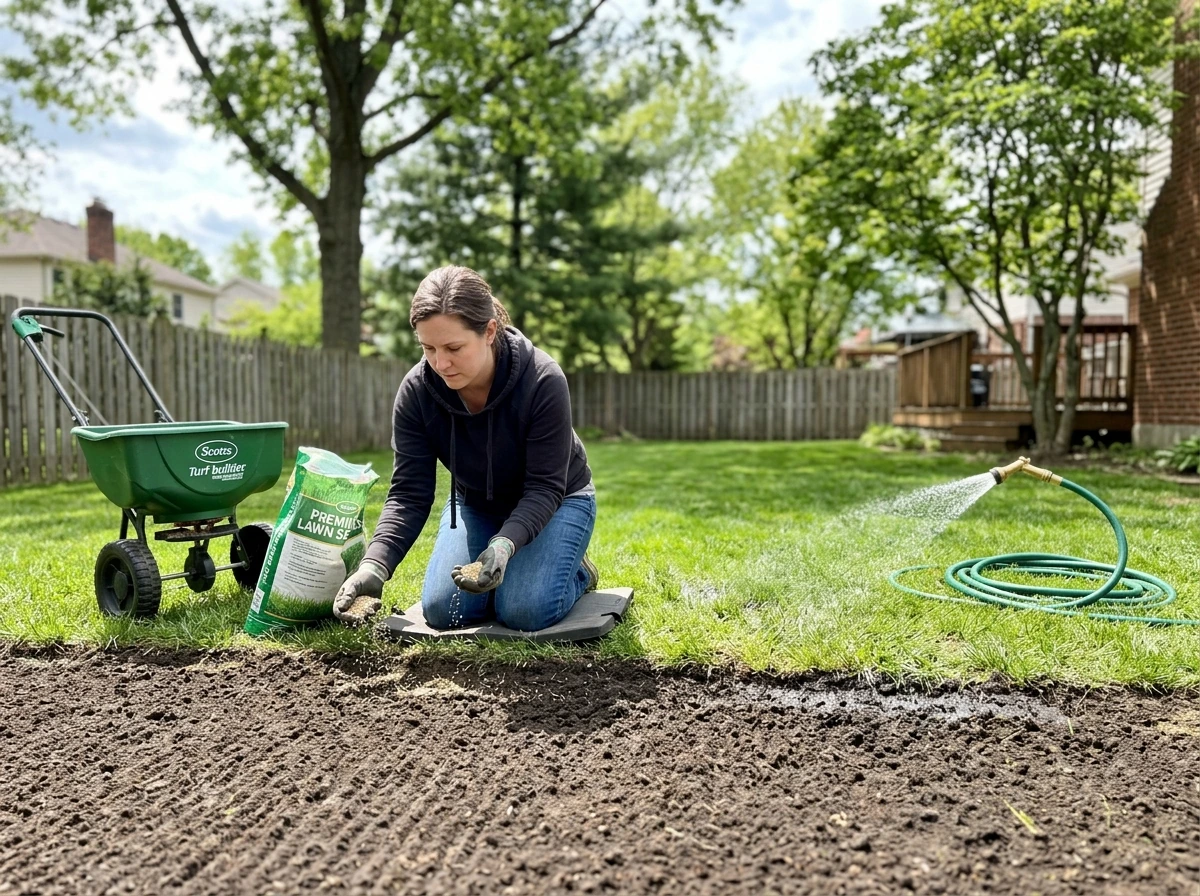
To grow grass successfully, you need the right seed for your region and conditions, a properly prepped soil surface, good seed-to-soil contact, consistent moisture during germination, and a realistic timeline. That's the short answer. The longer answer is that most lawn failures trace back to skipping one of those five things, and this guide walks you through every one of them so you don't waste a bag of seed and a month of watering on a patch of nothing.
What Do I Need to Grow Grass? Beginner Lawn Checklist
Marcus Tillwell
24 Mar 2026
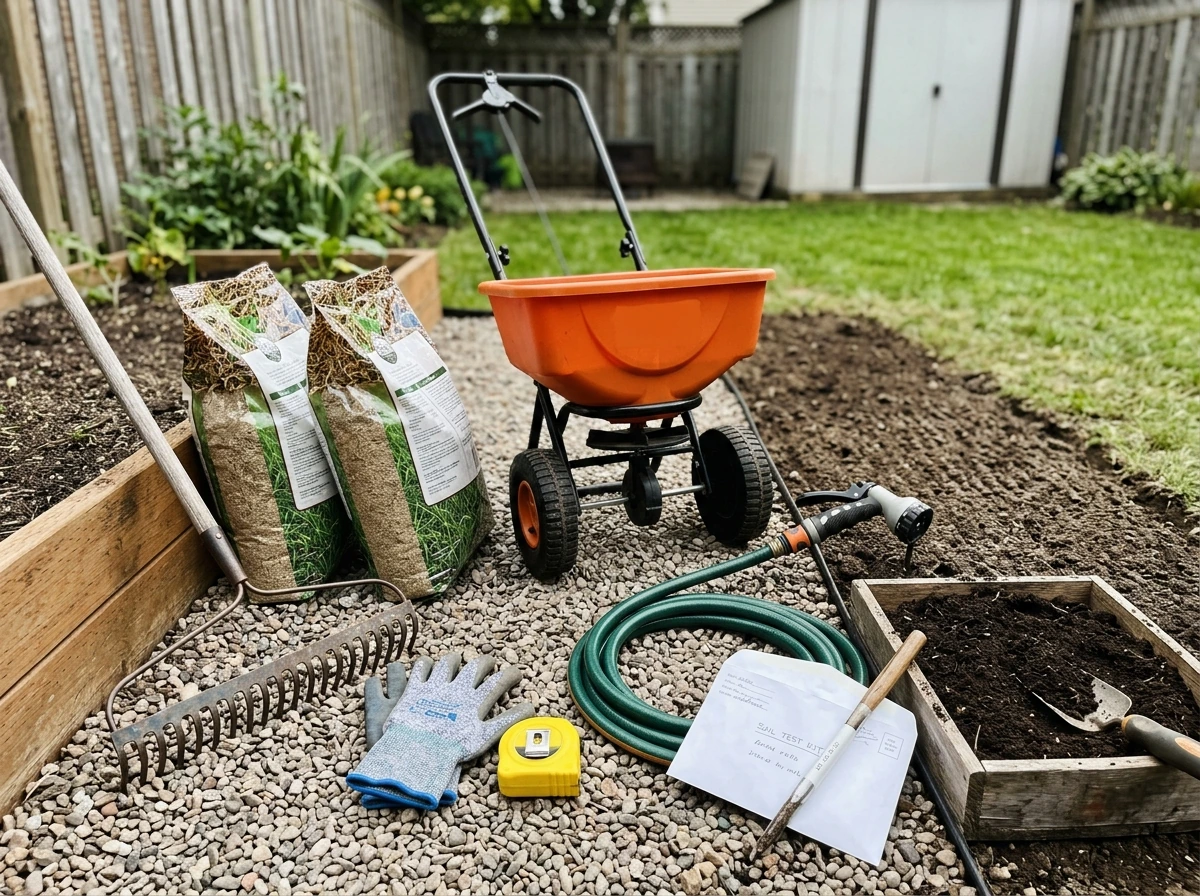
Your essential checklist before you start
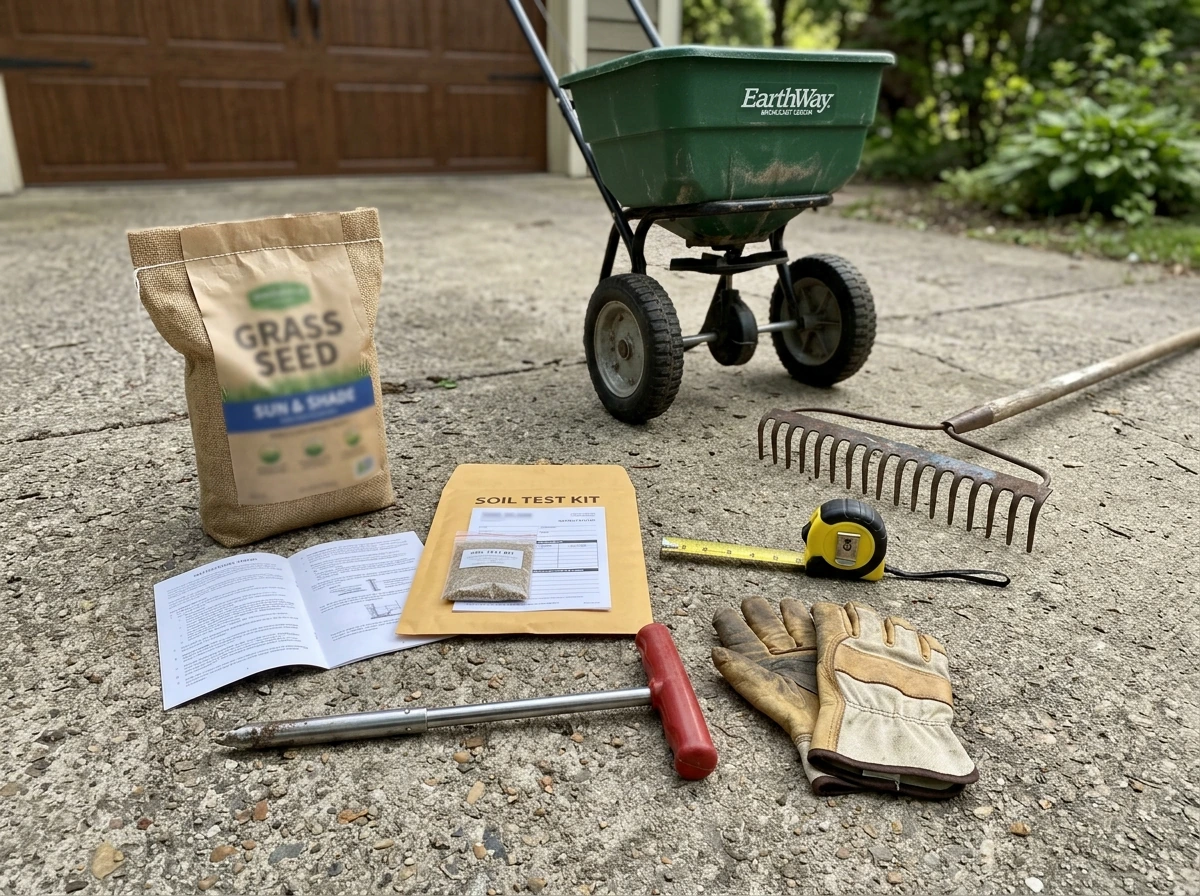
Before you buy anything or touch a shovel, it helps to know exactly what you're working with and what you'll need. Here's the basic supply list for seeding a lawn from scratch or repairing bare spots:
- Grass seed matched to your region and light conditions (more on this below)
- Soil test kit or a mailed-in test from your local extension office (usually $15–$20)
- Lime or sulfur to adjust pH if needed
- Starter fertilizer (look for a higher middle and last number, like a 5-10-10 or 12-12-12)
- Compost or aged topsoil for amending problem areas
- Rake (a stiff bow rake for prep, a leaf rake for covering seed)
- Lawn spreader (drop or broadcast) for even coverage
- Straw mulch or erosion control blanket to protect seed on slopes
- Garden hose with a gentle spray nozzle, or a sprinkler you can set to light output
- Measuring tape to estimate square footage so you buy the right seed quantity
You don't need a rototiller, professional-grade equipment, or a truckload of amendments. Most successful home seeding jobs get done with the basics above. What matters far more than gear is preparation and timing.
Prep your site first, or plan to redo it later
Site prep is the step most people rush through, and it's the reason their grass comes in thin, patchy, or not at all. Get this right and everything else becomes easier.
Test your soil before you do anything else
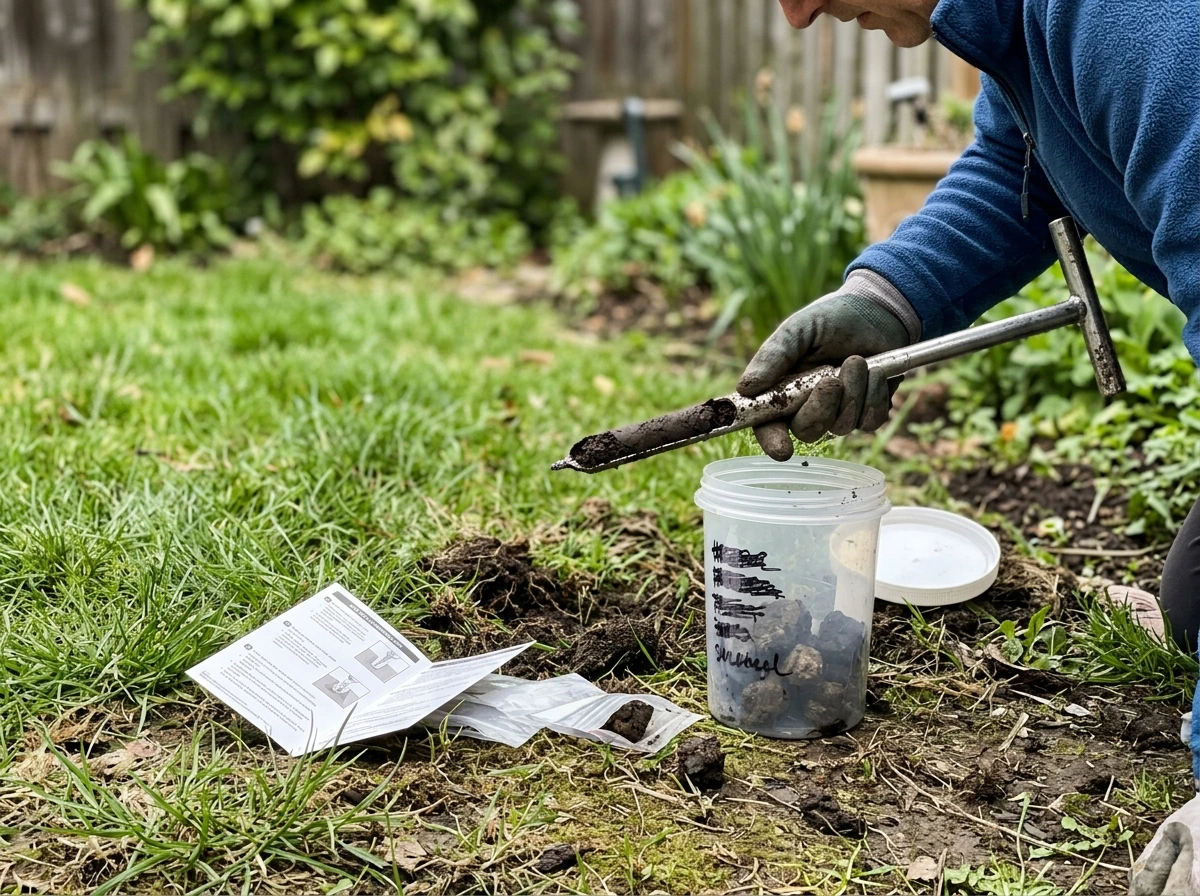
A soil test takes about two weeks and costs very little, but it tells you exactly what your soil is missing. For most cool-season grasses like Kentucky bluegrass and fescues, you're aiming for a pH between 6.0 and 7.0. Kentucky bluegrass specifically likes 6.5 to 7.2. Fine fescues, perennial ryegrass, and tall fescue are a bit more tolerant of acidity and do fine in the 6.0 to 6.5 range. If your soil is below 6.0, lime will bring it up. If it's above 7.5, sulfur will bring it down. Skipping this step means you might seed into soil where nothing will thrive no matter how well you water.
Your local cooperative extension office is the cheapest and most accurate option for soil testing. They'll also tell you exactly how much lime or fertilizer to apply per 1,000 square feet based on your specific results, which saves you from guessing.
Remove weeds, debris, and anything competing with your seed
Existing weeds will out-compete new seedlings every time. Pull them by hand for small areas, or use a non-selective herbicide like glyphosate and wait the recommended time (usually 7 to 14 days) before seeding. Clear out rocks, sticks, thatch, and any matted dead grass. You want the soil surface as open and workable as possible. If you're reseeding bare spots, loosen the top half-inch to an inch of soil so the seed has somewhere to settle.
Fix your soil type issues now, not after planting
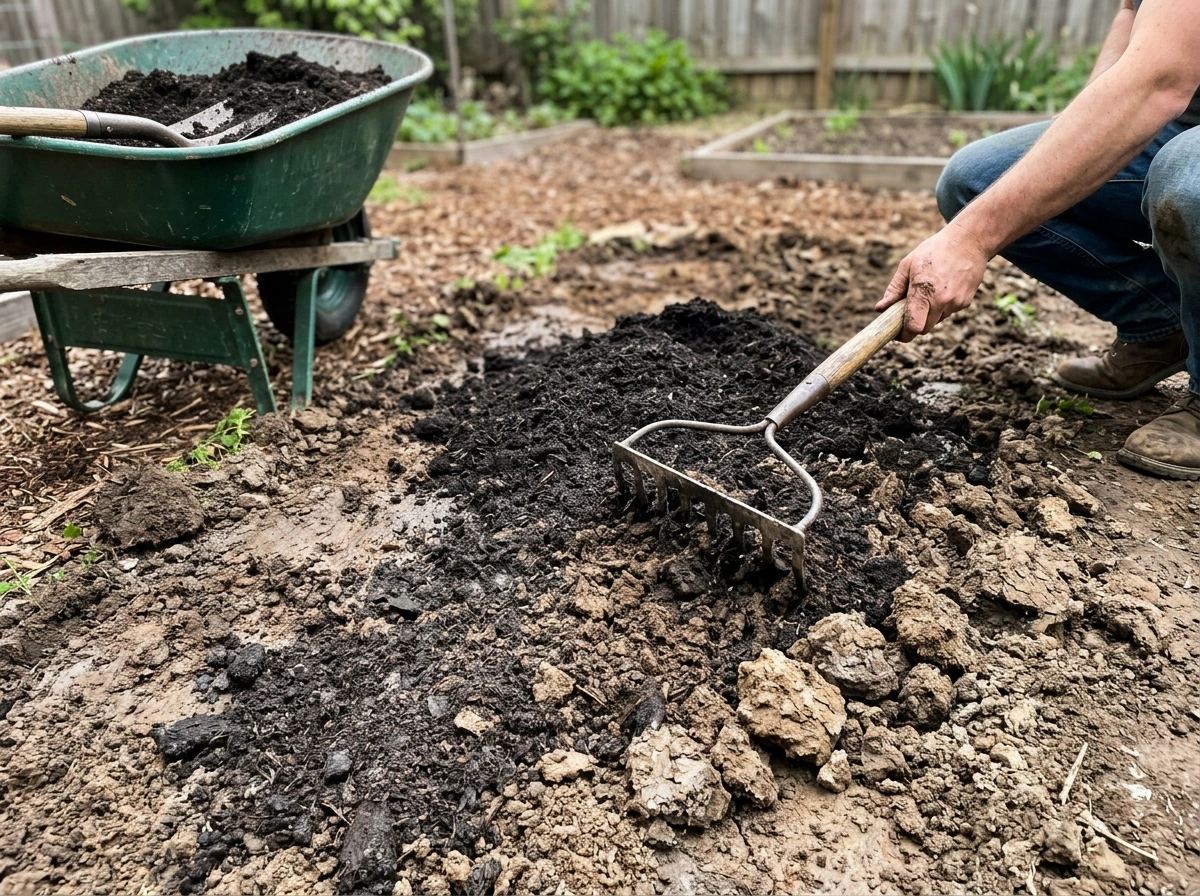
Clay soil and sandy soil both cause problems, but they're solved the same basic way: compost. For clay, compost loosens the structure, improves aeration, and helps water drain through instead of sitting on top. For sandy soil, compost adds the water and nutrient retention that sand naturally lacks. Work 2 to 3 inches of quality compost into the top 4 to 6 inches of soil before seeding. One critical warning: don't just lay compost on the surface and hope it helps. Improper layering, where you leave a distinct boundary between soil types, can actually impede water movement and block root penetration. Mix it in.
If your yard has low spots where water pools, or high spots that dry out immediately, now is the time to rough-grade them. You don't need to be perfect, but standing water after rain is a fast way to rot new seedlings. Rake things out to get a reasonably even surface with a slight slope away from your house foundation.
Picking the right grass seed for your situation
The single biggest mistake homeowners make is buying whatever seed is on sale without checking whether it actually suits their region, light conditions, and soil. Here's how to match seed to your specific situation.
Cool-season vs. warm-season: start here
If you're in the northern half of the country (think Ohio, Virginia, Oregon, Colorado, the Northeast), you're in cool-season territory. Your best options are tall fescue, fine fescues, Kentucky bluegrass, and perennial ryegrass. These grasses go dormant in summer heat and thrive in fall and spring. If you're in the South (Georgia, Florida, Texas, South Carolina) or the transition zone, warm-season grasses like bermudagrass and zoysiagrass are your go-to. They green up in summer and go dormant in winter.
Matching seed to your light, use, and challenges
| Grass Type | Region | Sun Needs | Shade Tolerance | Best For | Notes |
|---|---|---|---|---|---|
| Tall Fescue | Cool-season (North, Transition) | Full sun to part shade | Moderate | High-traffic lawns, clay soil, bare spots | Tough, drought-tolerant once established; good all-around cool-season choice |
| Fine Fescue (Creeping Red, Chewings) | Cool-season (North) | Part shade to full shade | High | Shady lawns, low-maintenance areas | Best shade performer among cool-season grasses; low fertility needs |
| Kentucky Bluegrass | Cool-season (North) | Full sun | Low | Lush, traditional northern lawns | Slow to establish; often mixed with ryegrass to speed coverage |
| Perennial Ryegrass | Cool-season (North, Pacific Northwest) | Full sun to light shade | Low to moderate | Quick coverage, overseeding, cool climates | Germinates fast (5–7 days); good for bare spots needing quick results |
| Bermudagrass | Warm-season (South) | Full sun (6+ hours) | Very low | High-traffic southern lawns, drought areas | Aggressive spreader; goes dormant and turns brown in winter |
| Zoysiagrass | Warm-season (South, Transition) | Full sun (6–8 hours) | Moderate | Low-maintenance southern/transition lawns | Slow to establish; usually done by sod or plugs rather than seed |
If you have a shady yard, fine fescues are your best friend in cool climates. No grass thrives in deep shade, but fine fescues come closest. If you're dealing with a mix of sun and shade, a shade-tolerant tall fescue blend will handle both reasonably well. For warm-season lawns in shady spots, zoysiagrass edges out bermuda, which really struggles with less than 6 hours of direct sun.
If you have pets
Dog urine causes those straw-colored dead patches with a dark green ring around the edge. The damage comes from the high nitrogen and salt concentration in urine. No grass variety is truly immune, but tall fescue and perennial ryegrass tend to recover faster because they germinate and fill in quickly. The most practical solution is to water the spot immediately after your dog urinates to dilute the concentration before it burns the grass. This sounds tedious but it genuinely works. Keeping the area slightly overseeded also helps, since bare patches invite more digging and damage.
When and how to plant: timing and method matter
The best time to seed
For cool-season grasses, early fall is the best window by a wide margin. In most of the northern US, that means late August through mid-October. Soil temperatures are still warm enough for germination, air temperatures are cooling down so seedlings aren't stressed, and you have several months of mild weather ahead for establishment before summer heat arrives. In Virginia, for example, the optimal window is September through mid-October. Spring seeding works but leaves you with a much shorter establishment window before summer stress hits, and weed pressure is much higher. If you plant in spring, do it as early as possible and commit to irrigation through the summer.
For warm-season grasses like bermuda and zoysia, late spring through early summer (once soil temps are consistently above 65°F) is your target. Planting too early when soils are cold leads to slow or failed germination. Sod is more forgiving about timing than seed, and can go down almost any time of year as long as you can water it, but you'll still get the best results in the appropriate growing season.
Seed vs. sod: which should you use?
Seed is cheaper, gives you more variety options, and works well for large areas. Sod gives you an instant lawn and is more forgiving of imperfect timing since you're not waiting for germination. For most homeowners seeding from scratch, seed is the practical choice if you're willing to commit to the watering schedule. Sod makes more sense for high-traffic areas where you can't protect a seedbed, for erosion-prone slopes, or when you need results quickly.
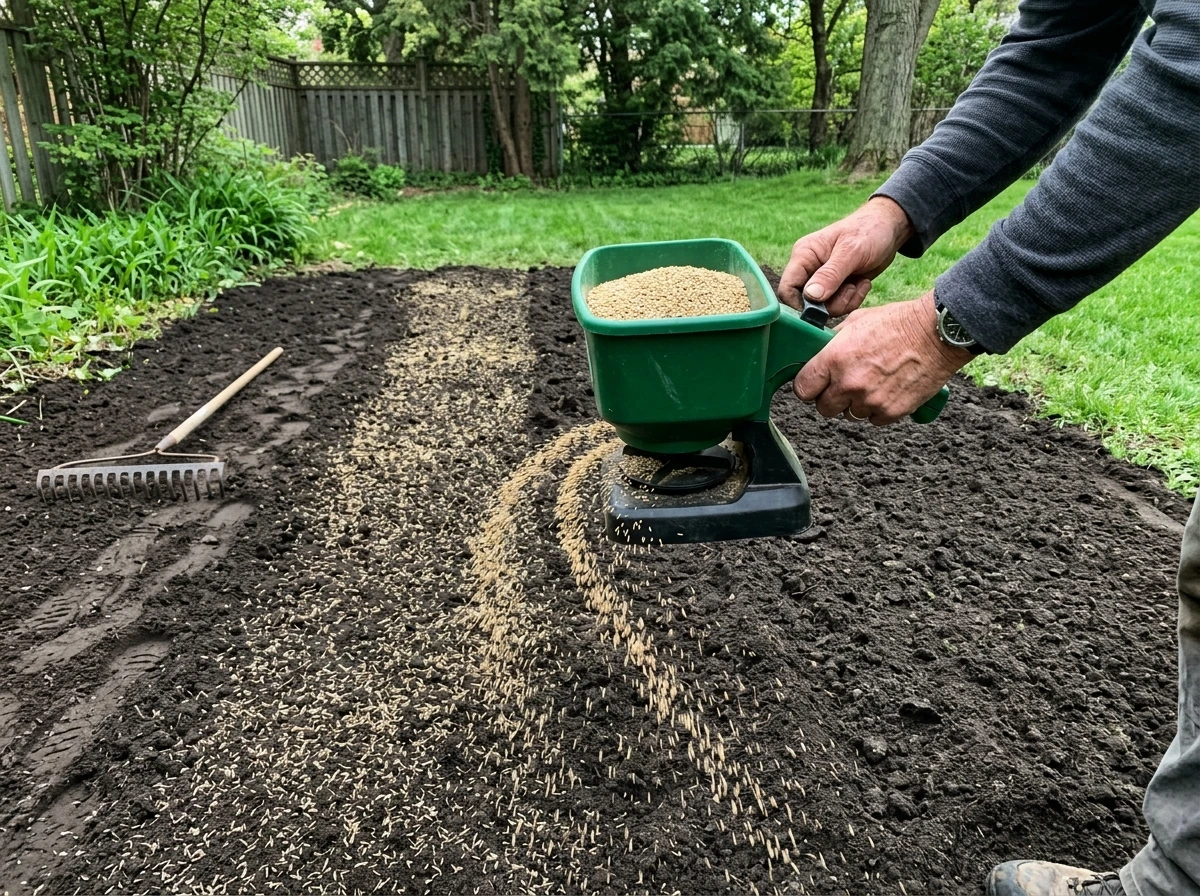
How to seed correctly
- Calculate your square footage (length x width for rectangular areas; break odd shapes into sections).
- Choose your seeding rate based on grass type (see below) and apply with a broadcast or drop spreader for even coverage.
- Split your total seed amount in half and make two passes at right angles to each other. This is the easiest way to get even distribution.
- Rake lightly after seeding to work seed into the top quarter-inch of soil. You want seed touching soil, not sitting on top of it.
- On slopes, apply a thin layer of straw mulch or an erosion control blanket to keep seed and soil in place during watering.
- Water immediately and begin your establishment watering schedule.
Seeding rates to use
| Grass Type | Seeding Rate per 1,000 sq ft |
|---|---|
| Kentucky Bluegrass | 2–3 lb |
| Fine Fescues | 3–5 lb |
| Perennial Ryegrass | 3–5 lb |
| Tall Fescue | 4–8 lb (6–8 lb for new lawns from scratch) |
| Bermudagrass (hulled seed) | 1–2 lb |
If you're overseeding thin areas rather than starting from scratch, use the lower end of the range. For a completely bare area, use the higher end to compensate for seeds that don't make good soil contact or get eaten by birds.
Keeping seedlings alive through germination and early growth
This phase is where most people lose their lawn. The rules are simple but they require consistency: keep the seed moist, don't overwater to the point of runoff, and don't let the surface dry out mid-germination. One dry day during germination can kill seedlings that haven't rooted yet.
The watering schedule that works
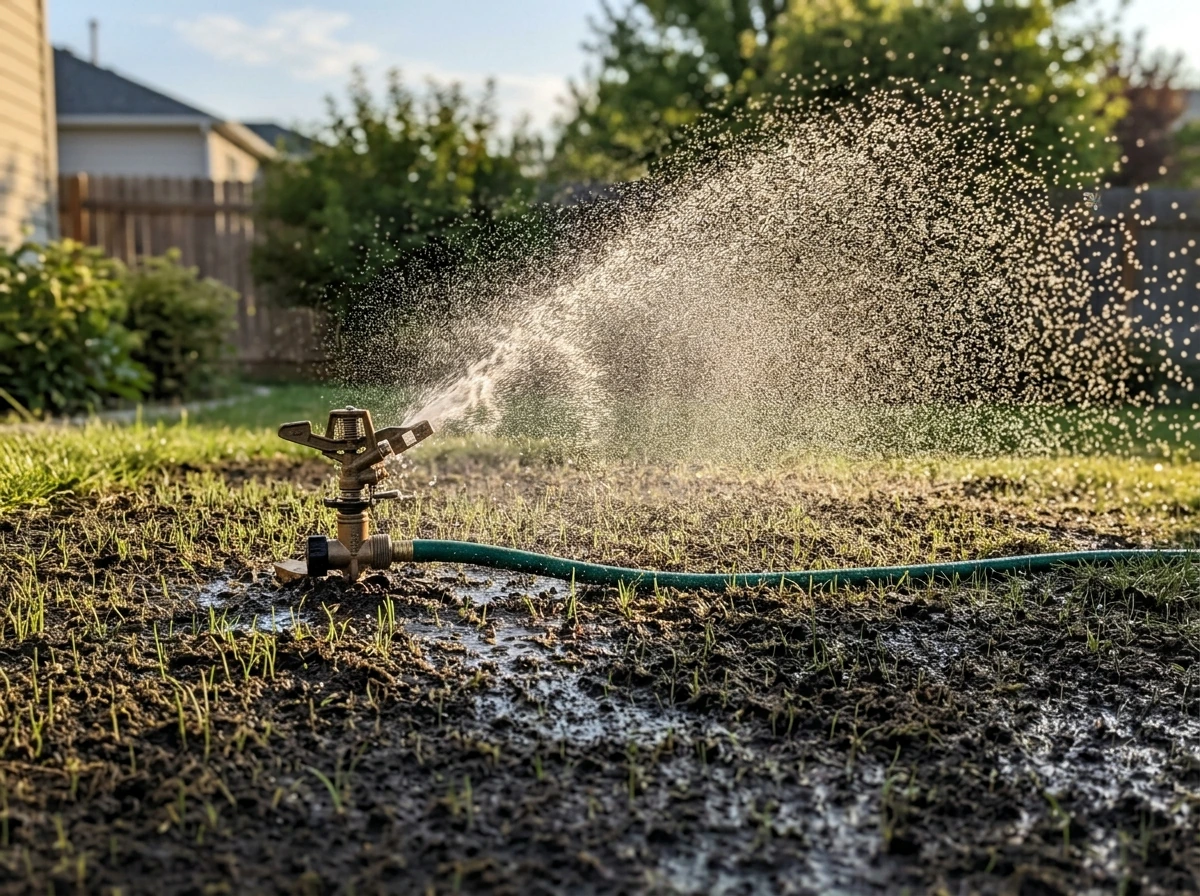
For the first 7 to 10 days after seeding, water lightly two to three times per day. The goal is to keep the top half-inch of soil consistently moist, not soaked, this is the core of how to grow great grass successfully. A gentle spray nozzle or oscillating sprinkler set to low output works better than a strong stream that washes seed around. If your soil is sandy and dries out in under an hour, you may need more frequent misting. If it's clay and stays wet, you can stretch intervals slightly, but don't let it crust over.
From roughly day 10 through week 4, as seedlings are establishing, back off to watering two to three times per week with slightly longer run times. By week four, you can reduce to once or twice a week. Once the lawn needs its first mowing, shift completely to deep, infrequent watering (about an inch per week in one or two sessions) to drive roots deeper into the soil. Deep roots are what make a lawn drought-resistant and long-lasting.
One important commitment: once you start watering a seedbed, you can't abandon it. If you irrigate to trigger germination and then let the surface dry out, you'll lose the seedlings. Only start seeding if you can commit to the full watering schedule through establishment.
First mowing and weed control
Wait until your new grass reaches about 3 to 4 inches tall before mowing for the first time. For most cool-season grasses, that's somewhere around 3 to 5 weeks after germination. Set your mower high (3 to 3.5 inches) and make sure the blade is sharp. A dull blade tears seedlings out of the ground instead of cutting them. Don't apply pre-emergent herbicides to a new seedbed because they'll also prevent your grass seed from germinating. Post-emergent weed control can be used carefully after the lawn has been mowed two or three times and is well established, but in the first four to eight weeks, your seedlings are vulnerable. Pull weeds by hand for now if they're becoming a problem.
When grass won't grow: fixing real problems
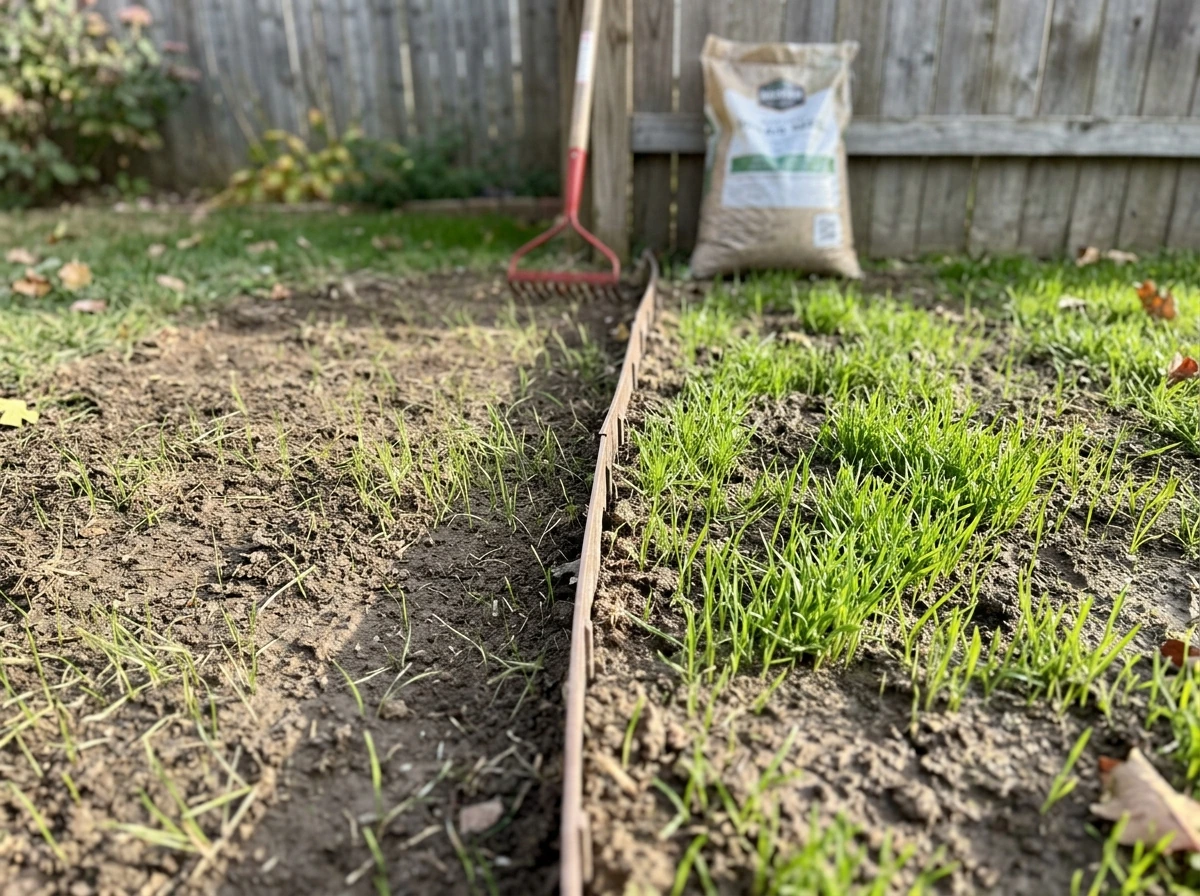
If you've seeded and things aren't working, it usually comes down to one of a handful of problems. Here's how to diagnose and fix each one.
Poor or zero germination
If nothing sprouted, the most likely causes are: soil that dried out mid-germination, seed that was buried too deep (more than a quarter inch down), old or low-quality seed with poor viability, or temperatures that were too cold or too hot for the variety you planted. Check the soil temperature before reseeding. Cool-season grasses need soil temps between 50°F and 65°F. Warm-season grasses need 65°F or above. Perennial ryegrass germinates fastest (5 to 7 days), while Kentucky bluegrass can take 2 to 4 weeks. If it's been longer than the expected germination window and nothing is showing, reseed with fresh seed and be more aggressive about keeping the surface moist.
Thin or patchy coverage
Patchy results usually mean uneven seed distribution, poor seed-to-soil contact, or competition from existing weeds or debris. Patchy results usually mean uneven seed distribution, poor seed-to-soil contact, or competition from existing weeds or debris. Next time, use the two-pass spreader method and rake seed in gently after application. For persistent bare spots, scratch the soil surface, apply seed at the high end of the rate range, top-dress with a thin layer of compost (no more than a quarter inch), and water immediately. Seed sitting on hard, bare soil without any cover has a much lower germination rate than seed that's lightly incorporated.
Clay soil that stays waterlogged or crusts over
Clay is the most common problem soil for new lawns. It compacts under foot traffic and rainfall, and a hard crust on the surface prevents seedlings from pushing through. If you're seeding in clay, work compost into the top 4 to 6 inches before seeding, not just the surface. After seeding, a very light top-dressing of compost helps prevent crusting. Aeration (renting a core aerator) before seeding dramatically improves results in heavily compacted clay by creating channels for roots and water. Avoid watering clay soil so heavily that it saturates; this is where light and frequent watering during germination matters most.
Sandy soil that dries out too fast
Sandy soil drains quickly, which sounds like a good thing until you're trying to keep a seedbed moist. In fast-draining sandy soil, you may need to water three or four times a day during germination rather than two. Adding 2 to 3 inches of compost worked into the soil before seeding is the best long-term fix because it physically improves the soil's ability to hold water and nutrients. A thin straw mulch over the seedbed also slows moisture evaporation significantly between waterings.
Grass keeps dying after coming in
If seedlings come up and then die back, the most common culprits are drought stress (the first 4 to 8 weeks are critical because root systems are still shallow), mowing too low too early, or disease from overwatering in humid conditions. Make sure you're transitioning to deeper, less frequent watering as seedlings mature, not continuing to mist lightly for months. Shallow watering over the long term creates shallow-rooted grass that can't survive summer heat or drought. If disease is an issue (look for brown rings or slime), improve airflow and reduce watering frequency slightly.
Growing a great lawn from seed isn't complicated, but it is unforgiving of timing mistakes and neglect during germination. Get the prep right, match your seed to your real conditions, and keep that seedbed moist for the first few weeks. If something goes wrong, most problems are fixable with a targeted reseed and an adjustment to soil quality or watering. You can also explore more specific guidance on choosing methods and timing in related articles covering the best approaches for backyard lawns and strategies for growing grass evenly across challenging areas.
FAQ
What’s the minimum I need to start growing grass (can I do it with just seed, soil, and water)?
You can, but you still need the two things people usually miss: correct grass type for your climate and a soil pH that’s not far off target. If you skip a soil test, at least plan to adjust pH based on your results so nutrients can actually become available to seedlings.
How much seed should I buy, and how do I avoid under-seeding a repair area?
Use the label rate for your exact grass and condition (start from scratch versus overseeding), then round up slightly if you expect birds, poor contact, or uneven coverage. For overseeding, apply near the low end of the rate since existing grass helps hold seed position, but for bare patches use the higher end because more seed is lost.
Is it ever too late to seed if I miss the recommended season?
Sometimes, yes. Cool-season grass seeded too late into hot weather often struggles to establish before summer stress and weed pressure rise. If you are late, prioritize the best possible moisture control and consider reseeding next optimal window rather than continuing through the most stressful temperatures.
Can I grow grass from seed on top of existing thick weeds or turf without removing everything?
Not reliably. New seedlings are weak and weeds will compete quickly, so you generally need to remove weeds and loosen the top soil for good seed-to-soil contact. If you can’t clear fully, expect lower germination and plan for spot reseeding after the lawn starts filling in.
How deep should I plant grass seed, and what happens if I bury it too much?
A common rule is to keep seed shallow, roughly no more than a quarter inch for most home seeding situations. Deeper planting reduces oxygen and slows emergence, so you can end up with patchy lawns even if watering is correct.
Should I use mulch or straw after seeding, and does it change watering needs?
A thin straw layer can help sandy seedbeds by reducing evaporation and drying between waterings, but it must not bury the seed deeply. With mulch present, water can feel less frequent, so check soil moisture under the straw to confirm the top half inch stays consistently moist.
Can I fertilize right after seeding, or will it burn seedlings?
In many cases, a light, soil-test-based fertilizer program is fine, but avoid heavy doses and avoid applying pre-emergent weed killers since they block germination. If you do use fertilizer, follow the per-1,000-square-foot guidance from your soil test (or the label) rather than guessing.
What’s the right first mowing height, and should I mow sooner if the lawn looks tall?
Wait until seedlings reach about 3 to 4 inches, then mow high (around 3 to 3.5 inches) with a sharp blade. Cutting earlier or too low increases the chance you tear out new grass before roots are strong.
How do I know if my irrigation pattern is washing seed away or under-watering?
Look at the water behavior during the first watering cycles: if you see runoff, you are watering too hard or too fast, and seed distribution will suffer. If the top half inch dries quickly, especially on sandy soil, you likely need more frequent lighter watering until germination begins.
What should I do if only some sections sprout, while others fail?
Treat it as a troubleshooting map. Patchy failure is often uneven seed-to-soil contact, inconsistent moisture, or debris/weeds in specific zones. Fix by scratching the surface in the worst spots, reseeding with fresh seed at the higher end of the rate, lightly top-dressing (thin layer), and watering immediately.
How long should I wait before I decide the seeding failed?
Compare emergence timing to typical germination for your grass type. If nothing appears after the expected germination window, assume viability or temperature was off and plan targeted reseeding with fresh seed and corrected soil temperature and moisture management.
Is dog urine damage treatable without replacing the lawn?
Yes, often. Because the burn comes from salts and concentrated nitrogen, immediate watering to dilute the spot is the fastest practical step. For prevention of repeat patchiness, overseed slightly in the affected zone so bare gaps do not become permanent digging targets.
If my grass comes up but turns thin or weak, should I keep mowing or adjust watering first?
Adjust watering first. New grass needs a shift from frequent light misting to deeper, less frequent watering as it matures, otherwise you train shallow roots that weaken in summer heat or drought. Mowing is important, but consistent root development depends more on the watering transition.
Next Article
How to Grow Grass in Your Backyard Step by Step
Step-by-step guide to grow grass in your backyard: pick the right seed, prep soil, sow, water, and fix bare spots.